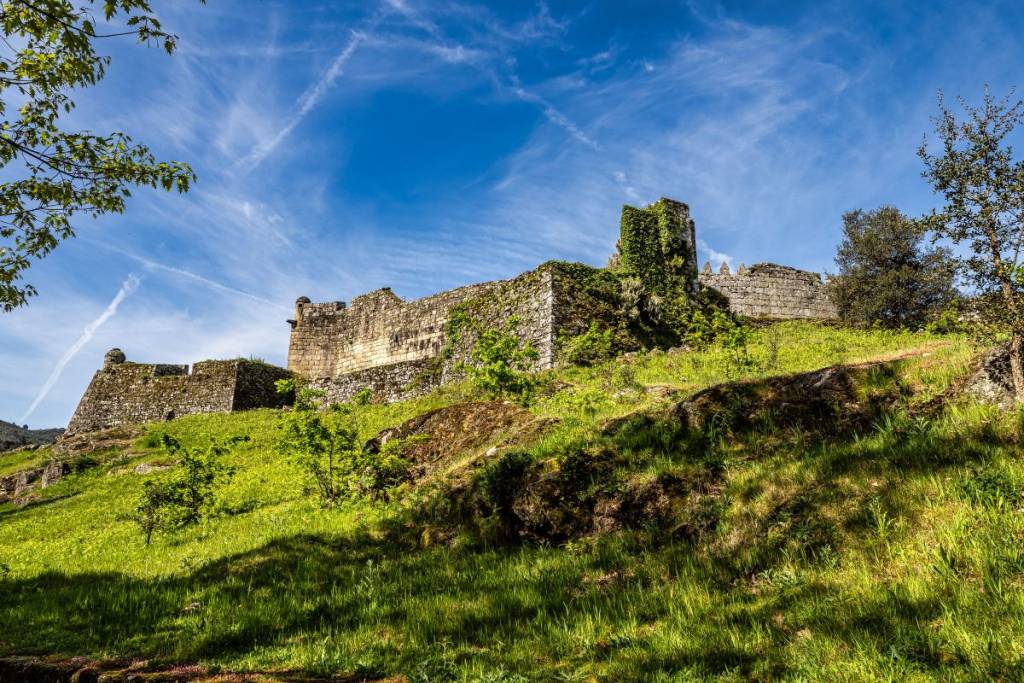

In the Alto Minho region, less than five kilometers from Spain, there is a castle that has watched over the Lima Valley since the 13th century. Lindoso Castle, located in the municipality of Ponte da Barca and within the Peneda-Gerês National Park, has been a National Monument since 1910 and is about an hour and a half by car from Porto.
More than seven centuries of history
The Directorate-General for Cultural Heritage (DGPC) considers it one of the country’s most important military monuments, not only because of its location overlooking the Lima River, between the Peneda and Gerês mountain ranges, but also because of the innovations it introduced to medieval Portuguese military architecture —such as curved corners instead of straight ones, so that no point in the surrounding area would escape the watchman’s gaze.
A fortress built by King Afonso III
Historians still debate the castle’s origins, but what stands today is believed to have been built during the reign of King Afonso III. According to the Ponte da Barca City Council, construction dates back to around 1250 as part of the defense of the border regions, and the castle was later expanded by King Dinis. The Cultural Heritage Department notes that the castle does not appear in the 1220 land surveys, but is already mentioned in those of 1258. The name itself is thought to be related to its location: some scholars trace it back to the Latin “Limitosum,” linked to the idea of a boundary.
Wars and a star-shaped wall
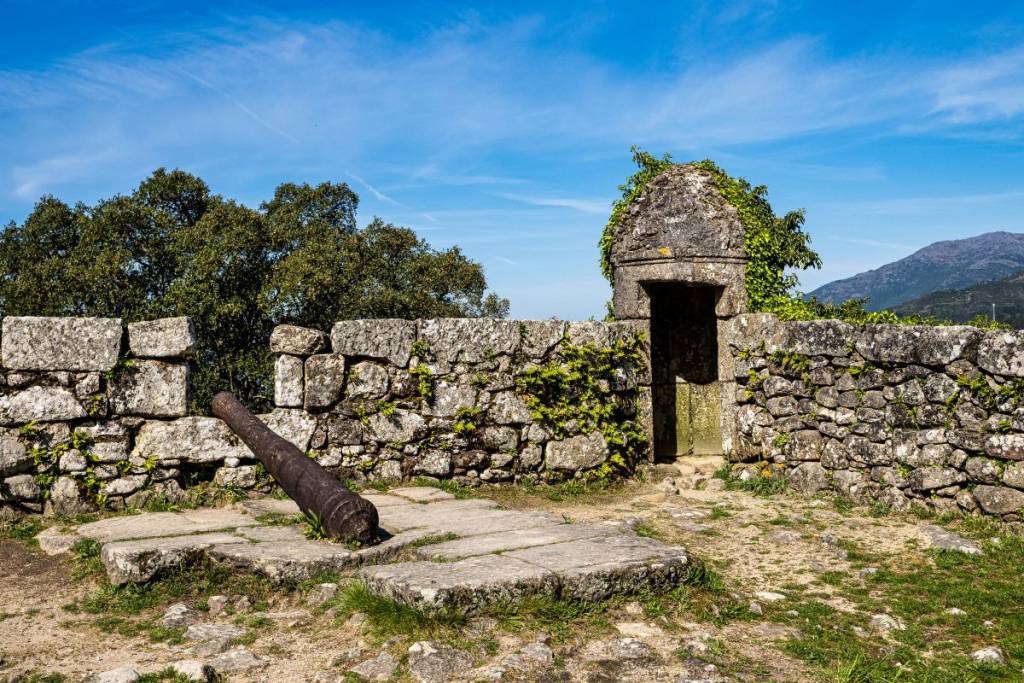
In the 17th century, during the War of the Restoration, the fortress returned to the front lines: it fell into Spanish hands and was recaptured by the Portuguese shortly before 1666, the year inscribed above one of its gates. It was at that time that it gained a new defensive ring—a star-shaped enclosure surrounded by moats and embankments, with a drawbridge at the entrance.
What to see in Lindoso
The granaries
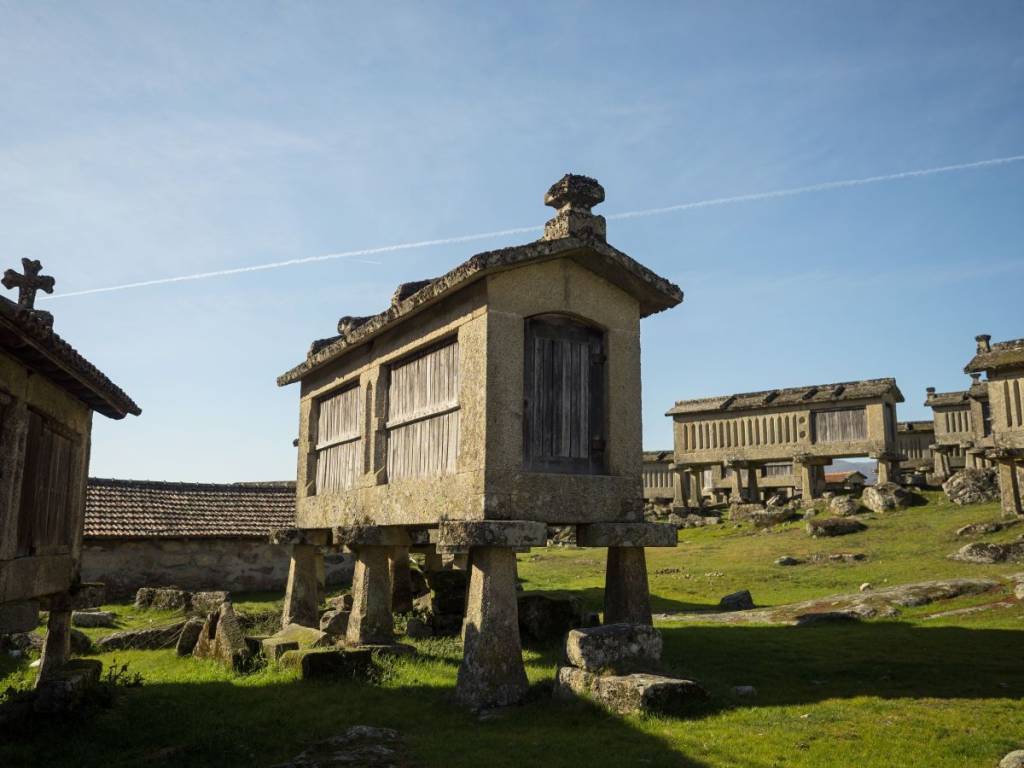
Right next to the castle lies Lindoso’s other postcard-worthy sight: a communal threshing floor surrounded by granite granaries, built between the 18th and 20th centuries to store grain. The Ponte da Barca City Council counts 64 of them and describes them as “the largest collection of granite granaries,” both in terms of quantity and quality. The complex is classified as a Property of Public Interest. Lindoso is also home to one of the entry points to the Peneda-Gerês National Park.
Inside the walls
Today, the keep houses the castle’smuseum, featuring an exhibition on human settlement in the Lindoso region from prehistoric times to the present day. Inside, the cistern and the remains of the governor’s quarters still stand. From the top, the view opens out over the Lima Valley and the reservoir of the Alto Lindoso Dam.
Don’t miss out! Follow uson Facebook,Instagram, and nowonWhatsApp too!