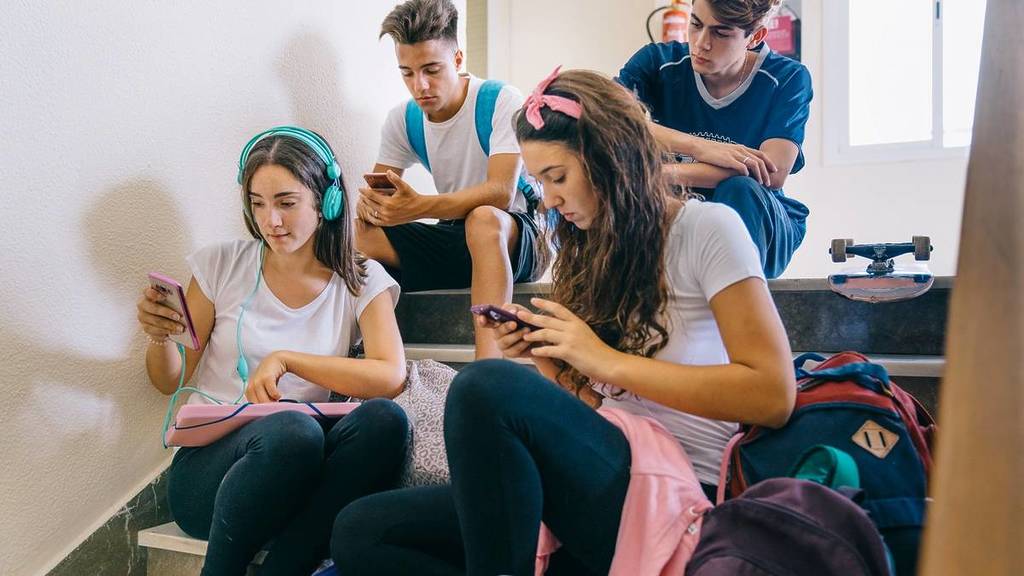

After Australia set a global precedent in banning minors from using social media, Europe is following suit. More recently, the Spanish government announced restrictive measures for minors under the age of 16.
“Social media has become a failed state, where laws are ignored and crimes are tolerated. […] We are going to protect minors from the digital wild west,” said Spanish Prime Minister Pedro Sánchez, quoted by El País.
Changes to the ‘age of consent’

Until now, Spanish law allowed young people up to the age of 14 to create profiles on social media without any restrictions. However, with the new law, the bar is raised on the grounds that the emotional maturity needed to deal with the negative effects of exposure to social media is not present in early adolescence.
In this context, one of the main objectives of the government of ‘nuestros hermanos’ is for large technology companies to invest in more robust identity verification that is difficult for young people to circumvent.
However, the new measures do not stop there, as the idea is also to hold platforms that allow minors under the age of 16 to register accountable. How? Through the application of heavy fines. In addition, with regard to parental control, the law reinforces that access between the ages of 14 and 16 now requires explicit and technical validation from legal guardians.
And Portugal?

Portugal may be one of the next countries to adopt similar measures. However, here, the debate is still very much focused on the use of cell phones in schools.
Even so, it is worth mentioning that the current Portuguese government has already presented a bill that aims to prohibit access to social media by minors under the age of 16, proposing parental intervention more or less similar to that presented by ‘nuestros hermanos’.
Don’t miss out! Follow us onFacebook,Instagram, and now also onWhatsApp!