After more than a century of waiting, one of the most eagerly awaited astronomical phenomena is preparing to ‘invade’ the skies over Porto: the total eclipse of the Sun, on August 12, 2026.
According to a press release from Ciência Viva – National Agency for Scientific and Technological Culture, the total eclipse of the Sun will be visible in its entirety in the Montesinho Natural Park, in Bragança.
Despite this, it will be possible to partially contemplate this phenomenon from other points in mainland Portugal, such as Porto, and the autonomous regions. In fact, the eclipse will be visible in a narrow band that crosses national territory, as well as Spain, Iceland, Greenland and the Arctic.
Where and how to watch the total eclipse?
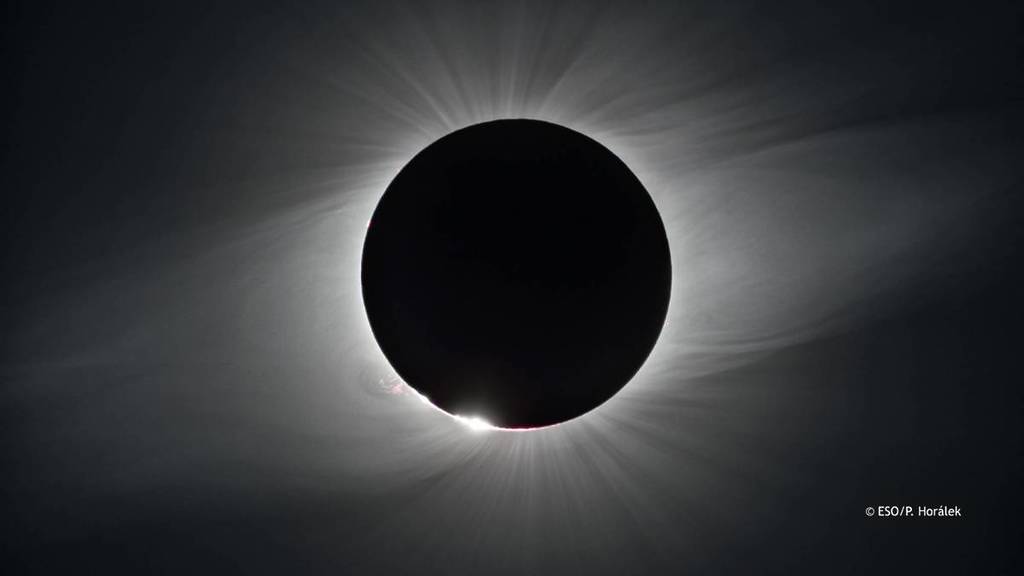
Observing the total eclipse of the Sun requires some planning, especially for those planning to travel from Porto to the district of Bragança, where “for 26 seconds, day turns into night”.
In addition to the logistics of the trip, and regardless of the geographical location, safety must be guaranteed when observing the phenomenon, so the use of certified solar filters is essential to avoid damaging the eyes.
Why is this phenomenon so special?
To begin with, it’s important to explain that a total solar eclipse occurs when the Earth, the Moon and the Sun are perfectly aligned, and the lunar satellite momentarily obscures the solar disk.
In Portugal, the scarcity of these events makes 2026 a historic year for national astronomy:
- The last time a total eclipse of the Sun was observed in Portugal was in 1912
- The next similar event won’t happen until 2144
- Even outside the zone of totality, the partial occultation will be over 90%, allowing the phenomenon to be observed quite satisfactorily throughout Portugal.
Don’t miss out! Follow us on Facebook, Instagram and now WhatsApp too!