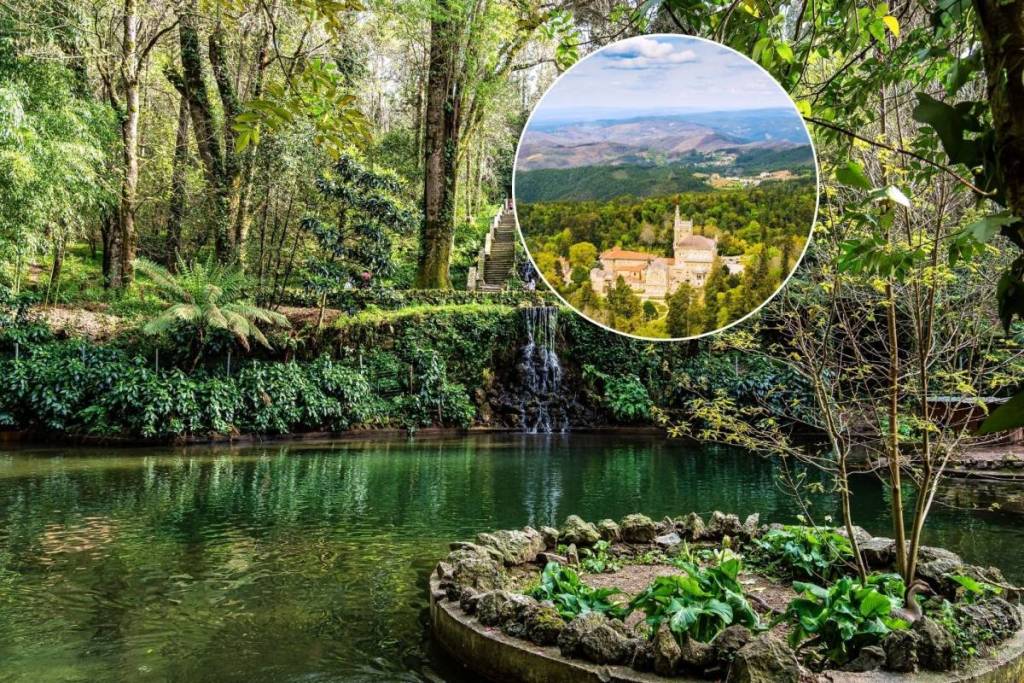

About 100 kilometers from Porto, just over an hour’s drive from Porto, there’s a forest that has just earned a distinction held by only three other places in the world: since this summer, the Bussaco National Forest has been the first certified Therapeutic Forest on the Iberian Peninsula and one of only four certified worldwide. We’ve put together everything you need to know to visit it—what a “therapeutic forest” is, the history behind the place, what to see, and where to stay.
What, exactly, is a therapeutic forest?
Unlike a park or a regular trail, a Therapeutic Forest is an area evaluated according to very specific criteria related to its potential to support health and wellness programs.
To earn the certification, the forest must meet a series of conditions: natural features that help dampen noise and provide shelter from the wind, air of proven quality, trails with varying levels of difficulty, and areas designed for relaxation. These types of practices are strongly associated with benefits such as reduced stress, anxiety, and blood pressure, as well as improvements in sleep and cognitive abilities. The certification was awarded by Healing Forest – International Certification Office.
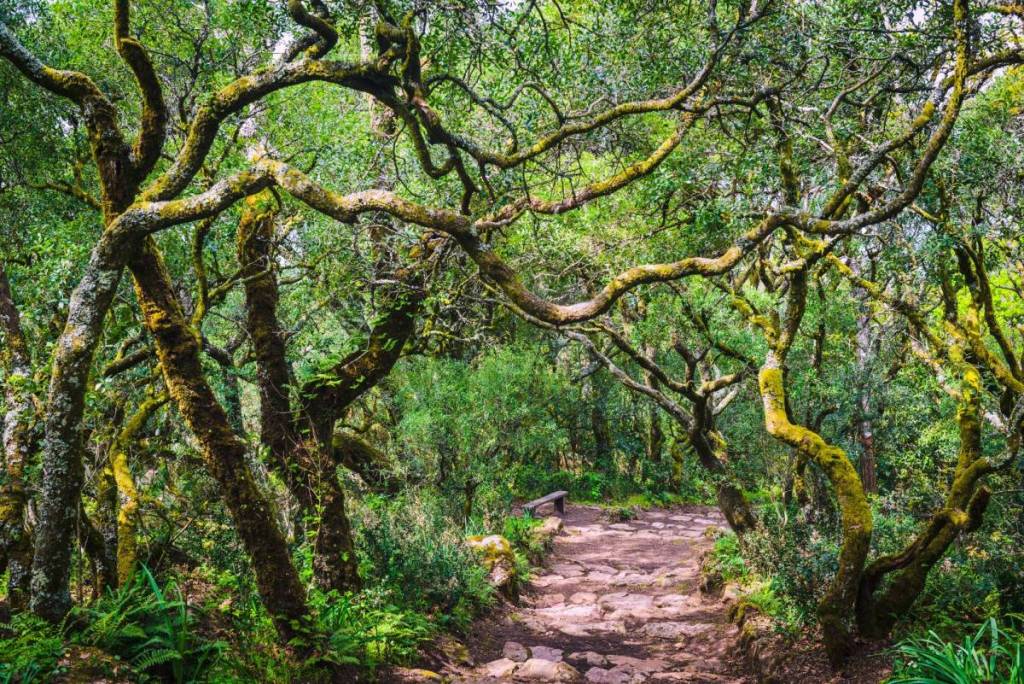
It’s worth clarifying: the certification doesn’t turn the forest into a medical treatment, but it does recognize its potential to support health programs, always under qualified supervision.
Four centuries of history, including a battle
It all began in 1628, when the Order of the Discalced Carmelites received this territory to build a “Desert” there—an isolated space dedicated to prayer and silence, protected even by papal decree. Starting in 1656, the monks began planting species from abroad, including the famous Bussaco cedar, which is, in fact, a cypress native to Mexico.
With the abolition of religious orders in Portugal in 1834, the Carmelites left Bussaco, which came under state administration. Throughout the second half of the 19th century, the forest gained new gardens, lakes, and fountains—including the Jardim Novo and the Vale dos Fetos.
The Bussaco Palace
It was also during that period, in 1888, that King Carlos I commissioned the construction of a hunting lodge in the heart of the forest. The monarchy’s financial difficulties prevented it from ever serving as a royal residence, and the building was later converted into what is now the Palace Hotel do Bussaco, one of the most photographed hotels in the country, with facades that look like something out of a fairy tale. Even those who aren’t staying there can admire it from the outside and stroll through the Jardim Novo surrounding it. Today, the entire Bussaco National Forest is designated as a National Monument.
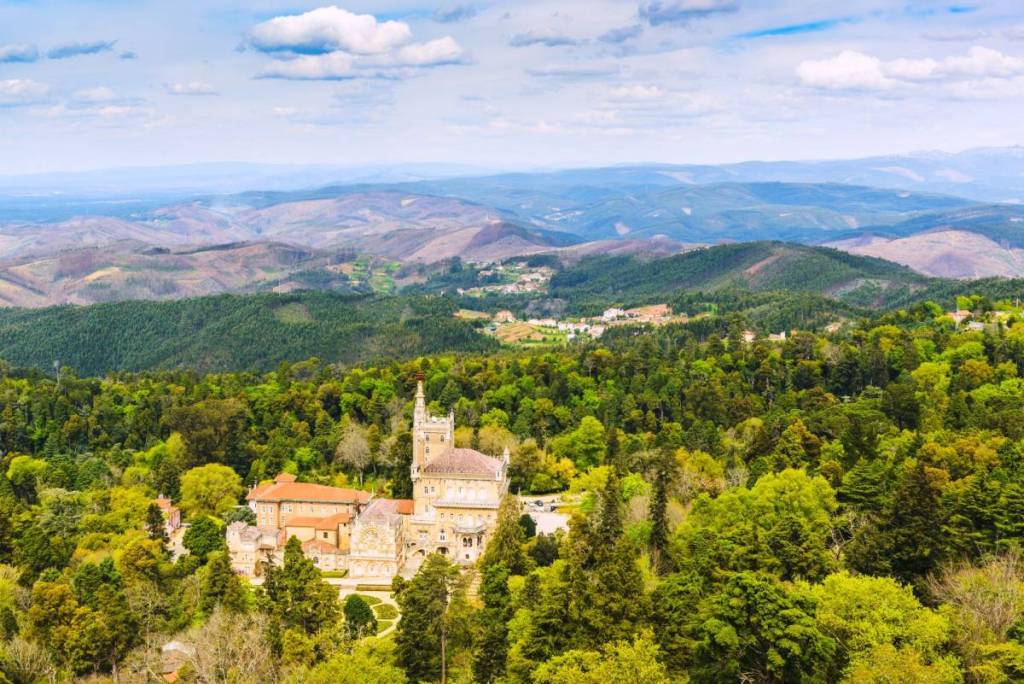
Covering about 105 hectares and home to more than 250 species of trees and shrubs —one of the finest dendrological collections in Europe—the forest also features an area known as the Relic Forest, located in the highest and rockiest part of the mountain range, which escaped the introduction of exotic species and preserves the characteristics of a primeval forest. Other points of interest include the Convent of Santa Cruz, the Bussaco Military Museum (dedicated to the battle of 1810), the Via Sacra, the Fonte Fria staircase, and the Cruz Alta Lookout, at an elevation of 550 meters.
Where to eat and stay besides the palace
If the Palace Hotel do Bussaco isn’t available, or if you’d prefer a different experience, the Grande Hotel do Luso, in the neighboring village, is a great alternative. The hotel was one of the partners in the application for Therapeutic Forest certification, and it’s also close to the Luso thermal baths and mineral springs.
When it comes to dining, the region is known for Bairrada-style roast suckling pig, served in the restaurants of Mealhada, and for the wine that has been produced in this area for decades: Bussaco wine.
How to get there from Porto
The Bussaco Forest is located in the village of Luso, in the municipality of Mealhada, about 100 km from Porto—a drive of about 1 hour and 10 minutes on the A1, exiting at Mealhada. By train, you’ll need to take a train to Coimbra-B and then transfer to the Luso-Bussaco station, since there’s no direct connection from Porto.
Don’t miss out! Follow us on Facebook, Instagram, and now on WhatsApp too !