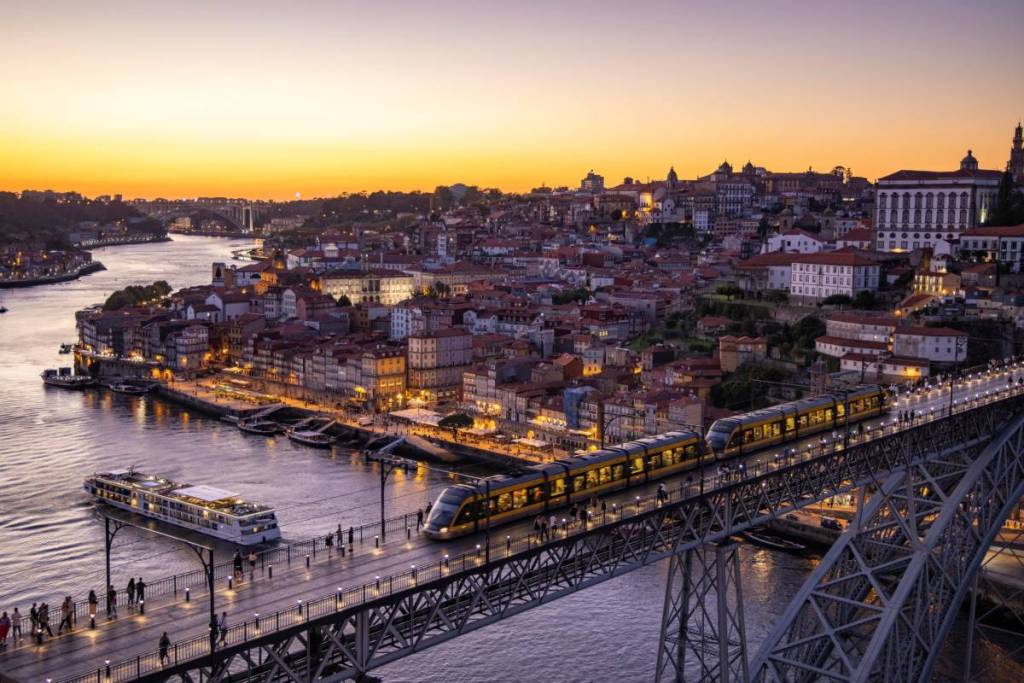

The Luís I Bridge turns 140 on October 31, Halloween. Inaugurated in 1886, the link between Porto and Gaia then featured a 172-meter metal arch—the largest of its kind in the world—and anyone crossing it on foot paid 5 réis. Today, the upper deck is used by the metro and pedestrians, and the bridge has been part of the site designated as a UNESCO World Heritage Site since 1996. These are the stories that few people know.
Five interesting facts about the Luís I Bridge
1. The 172-meter arch was the largest in the world of its kind
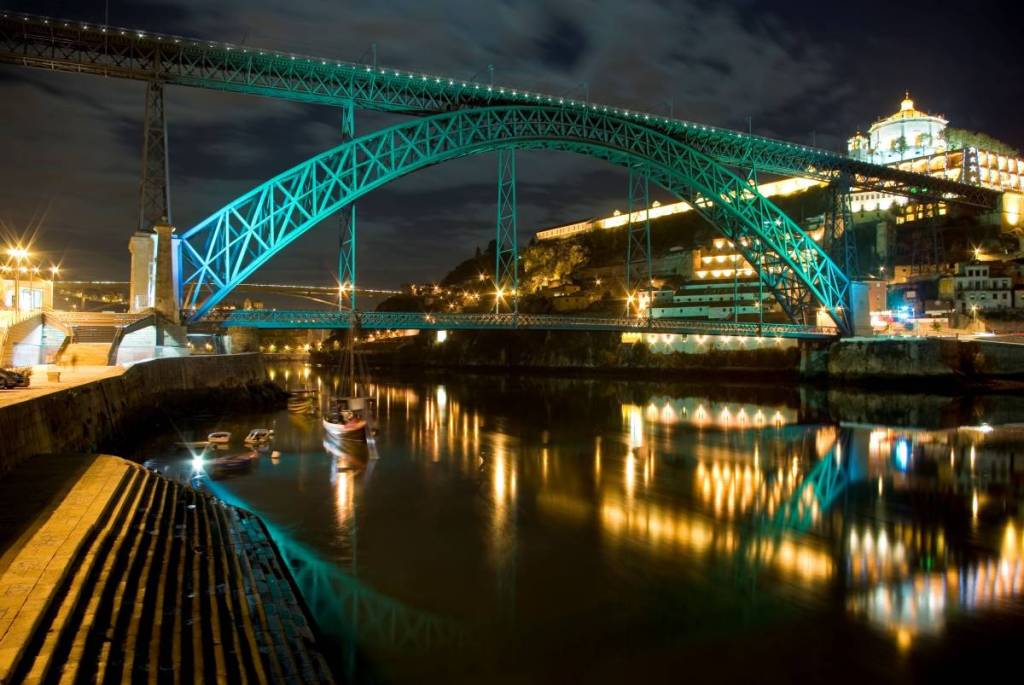
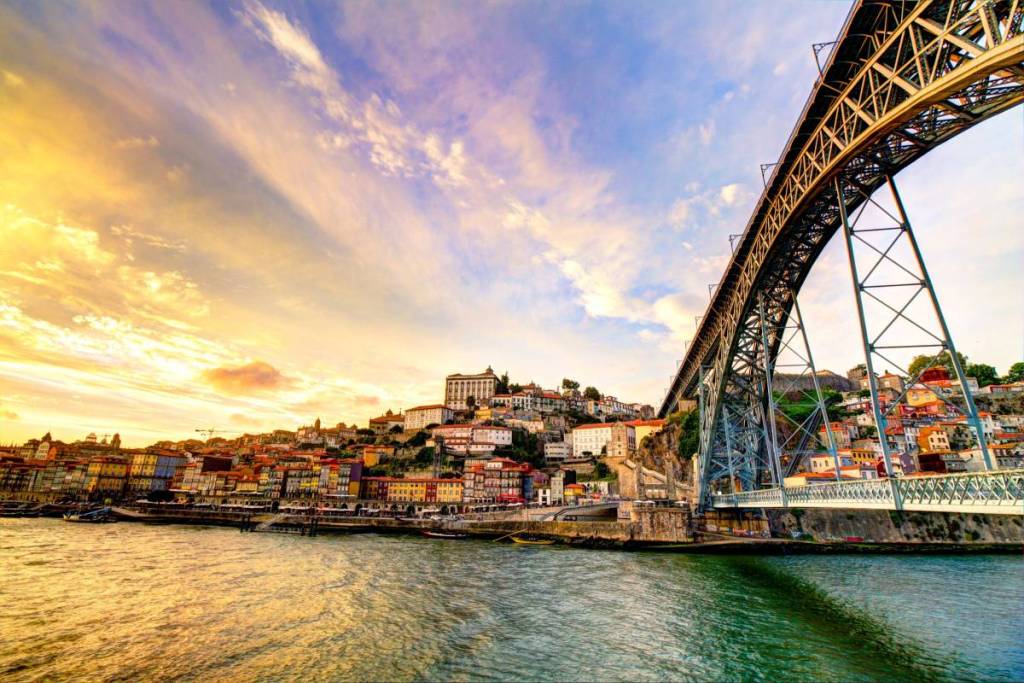
When it was built, the metal arch of the Luís I Bridge, with a 172-meter span, was unrivaled in the world among bridges of its kind. The entire original structure weighed 3,045 metric tons, and the arch spans the Douro from one bank to the other without any piers in the middle of the river.
2. It was not designed by Eiffel, but by a former partner of his
Its resemblance to the Maria Pia Bridge leads many to attribute it to Gustave Eiffel, but the design is by Théophile Seyrig, who had been a partner of Eiffel’s and worked with him on the Maria Pia Bridge. By the time he won the competition for the new bridge, Seyrig had already left the French engineer’s firm and was representing the Belgian Société de Willebroek.
3. Crossing it on foot cost 5 réis
Starting on November 1, 1886, pedestrians paid a toll of 5 réis to cross from one bank to the other. The toll system was not abolished until years later.
4. The king missed the inauguration—and there was a scare
The date was not chosen at random: on October 31, 1886, King Luís I turned 48. Even so, the king did not attend the ceremony. When the bridge opened to the public, the crowd rushed onto the deck and filled it completely.
According to a report in the Porto newspaper *O Comércio* the following day, cited by historian Manuel de Sousa, author of the *Porto d’Honra* project, the deck swayed slightly; someone shouted that the bridge was collapsing, and people began to flee.
5. “Dom” is not part of the official name
The official name is Ponte Luiz I, in the spelling of the time, and that is what the signs above the entrances to the lower deck say. Legend has it that Porto removed the “Dom” to protest the king’s absence, but the title was never part of the official name. In practice, the opposite happened: it is the people of Porto who, to this day, add the “Dom” to it.
The bridge today
The upper deck was closed to cars in 2003, and since September 2005, Metro Line D (yellow) has run along it, in addition to pedestrians. Below, cars and pedestrians continue to circulate. The bridge is part of the complex designated as a UNESCO World Heritage Site since 1996, along with the Historic Center of Porto and the Serra do Pilar Monastery.
Don’t miss out! Follow usonFacebook,Instagram,andnowonWhatsApp too!