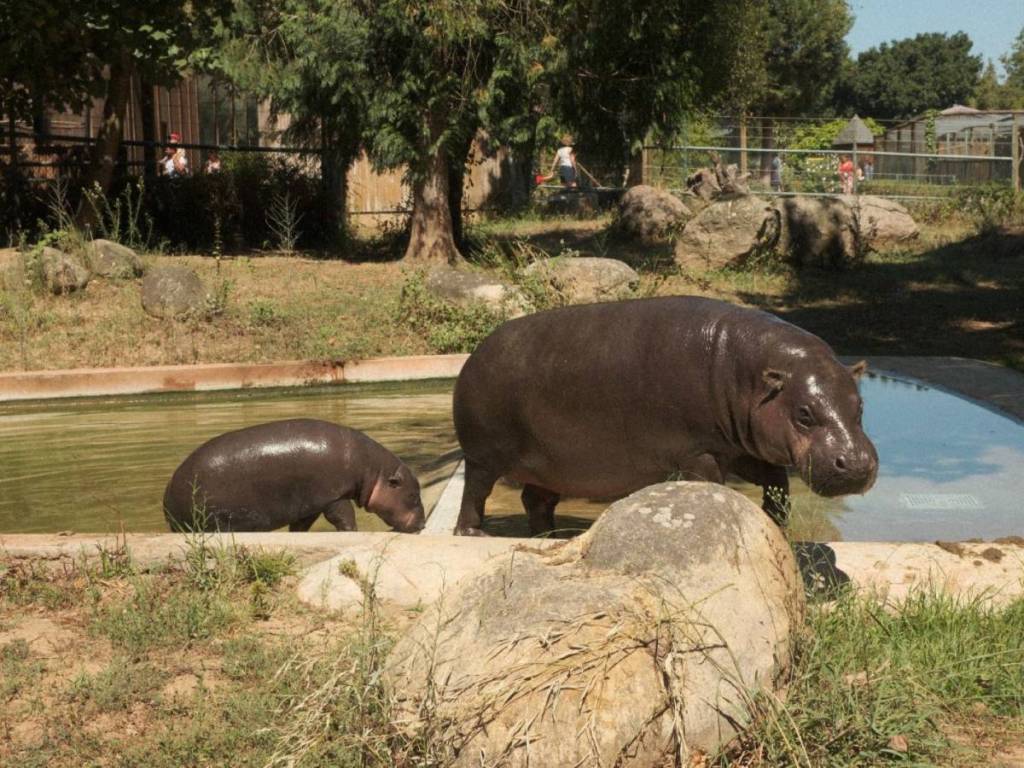

The Santo Inácio Zoo, in the municipality of Vila Nova de Gaia, recently announced the birth of a pygmy hippopotamus (Choeropsis liberiensis), a species classified as“Endangered” by the International Union for Conservation of Nature (IUCN), with a wild population estimated at approximately 2,000 to 2,500 individuals.
A Birth of Conservation Significance
Named Poipoi, the newest member of the pygmy hippopotamus family can now be seen by visitors at the zoo. This is the fifth calf born to Romina and Kibwana, a breeding pair that has played a key role in the European Endangered Species Program (EEP), coordinated by the European Association of Zoos and Aquariums (EAZA), of which the Santo Inácio Zoo is a member.
According to the press release, the birth is of added importance from a conservation standpoint: “only about one in ten births” of this species “is a male, making each calf particularly important for the genetic diversity of the European population.”
Deforestation Threatens the Species in West Africa
In the wild, the pygmy hippopotamus is found primarily in West Africa, where the pressure of deforestation has rapidly reduced and fragmented its habitat. The conversion of forests into rubber, coffee, and palm oil plantations, combined with intensive hunting, isolates the remaining populations, increasing their vulnerability.
During the first weeks of life, Poipoi remained in a reserved area to receive the necessary maternal care and gradually adapt to the aquatic environment, a behavior characteristic of the species. The Santo Inácio Zoo currently houses about 500 animals of 100 species and reports having recorded more than 275 births as part of EEP programs.