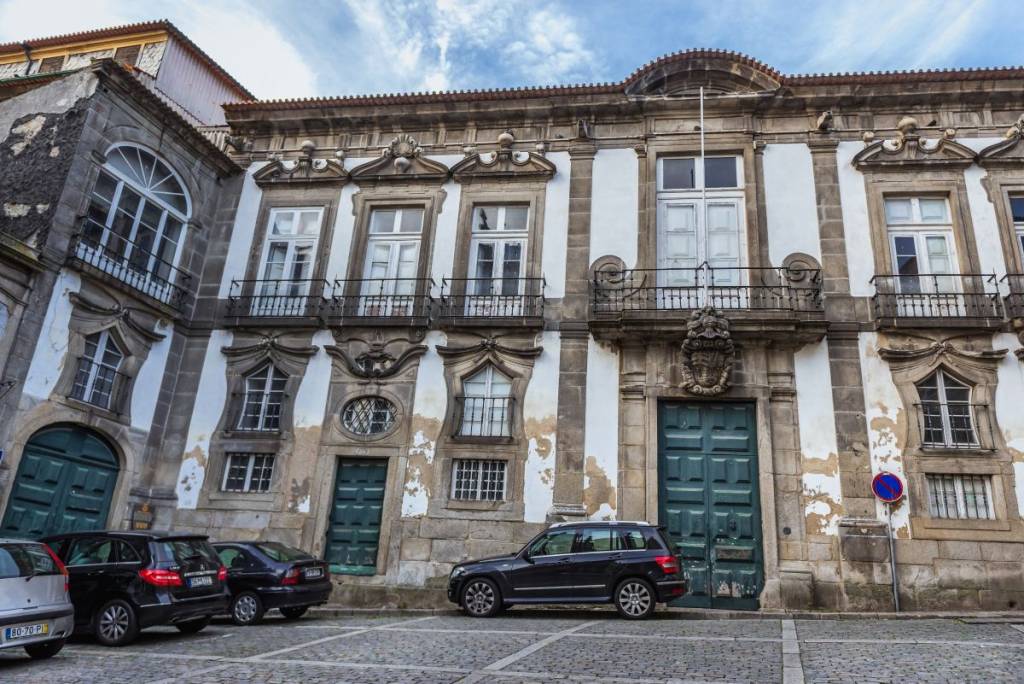

The doors of the São João Novo Palace in Miragaia have been closed for more than three decades. Now, the building is one step closer to coming back to life. The Porto City Council, through GO Porto, has launched a call for bids for the restoration project, with a base price of 940,000 euros and a 420-day deadline for the design, the municipal company announced. The palace will serve as the centerpiece of the Porto Museum.
What’s in store for the palace
The future museum will feature a permanent exhibition chronicling the history of Porto, its culture, and its identity, along with galleries for temporary exhibitions and educational programs. There will also be a documentation center, including a library open to the public, and an auditorium.
The palace’s old wine press will be preserved in a dedicated room, the Sala Memória, which also pays tribute to Fernando Lanhas, a Porto-born architect and one of the pioneers of abstract painting in Portugal. Outside, there are gardens and terraces to be restored, and even the Fernandina Wall, which runs along the rear of the property, will be included in the tour route.
The renovation work will still take some time. In 2024, the city estimated that the entire process would take about seven years and decided, in the meantime, to house the museum’s central hub on one floor of the Alfândega building, according to Jornal Económico, citing Lusa.
Nearly 300 years of history
The palace was commissioned in 1727 by Pedro Costa Lima, a nobleman of the Royal Household who managed the Ribeira shipyards. The Baroque façade led many to attribute it to Nicolau Nasoni, but it is now confirmed that the design is by Master António Pereira, according to the Cultural Heritage Department.
Over the centuries, prominent Porto families lived there. During the Siege of Porto, the building served as a military hospital for the liberal army and, later, housed the Tipografia Comercial Portuense printing house. In 1945, it became home to the Museum of Ethnography and History, which the Cultural Heritage agency ranks among the richest in the country.
In 1984, a fire left damage that only worsened the building’s condition, and in 1992, the museum eventually closed. Since December 2023, the palace—classified as a Property of Public Interest—has been managed by the Porto City Council under a 50-year agreement with the State.
Don’t miss out! Follow us on Facebook, Instagram, and now on WhatsApp too!