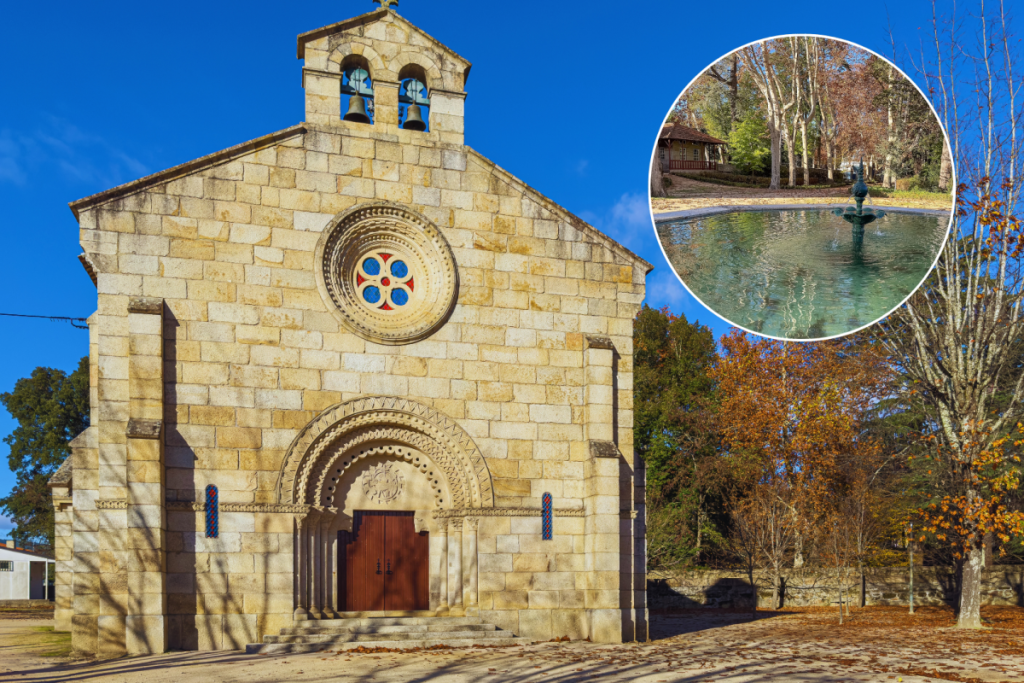

About 1 hour and 30 minutes from Porto, in the district of Vila Real, there is a small village that owes all its fame to water that springs from granite rock. Over the course of more than a century, Vidago has become one of the best-known names in Portuguese thermal tourism—complete with a century-old palace that continues to attract curious visitors to this day.
A Discovery Made Out of Thirst
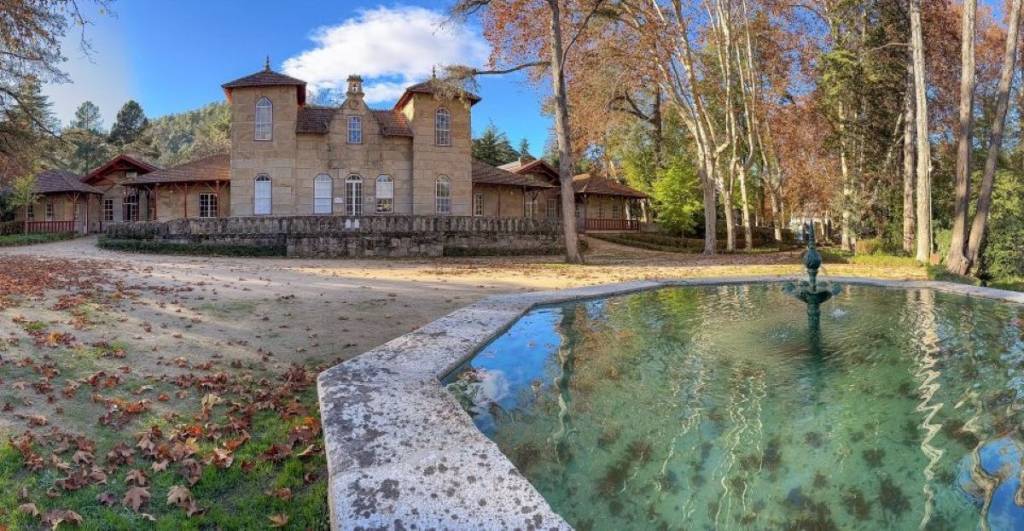
The story goes—as told, among others, by historian José Hermano Saraiva —that it all began around 1860, when a local farmer quenched his thirst at a spring he found along the way. He noticed that the water had a strange taste and that it also relieved stomachaches. The story reached a local doctor, who had the water analyzed—and it was confirmed that it had medicinal properties. The pretext for transforming Vidago into a spa destination had been found.
The dream of a palace that never hosted royalty
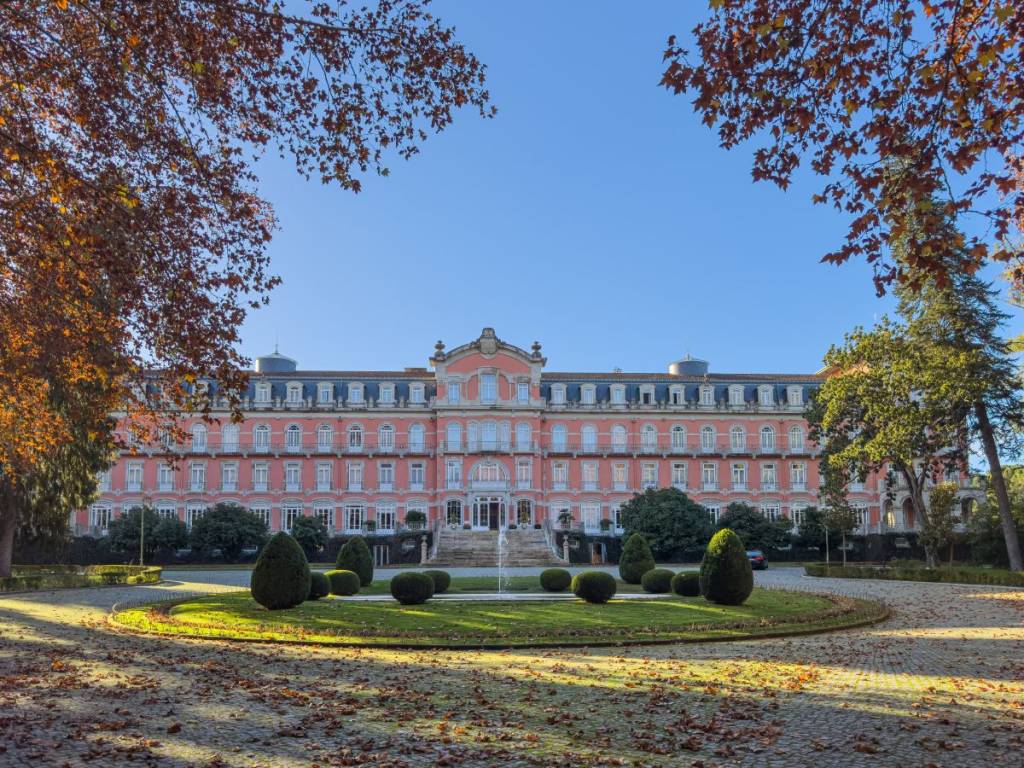
The fame of the waters attracted so many people that the Sociedade das Águas de Vidago decided to move forward with an ambitious project: to build a luxury hotel capable of rivaling the best in Europe. The architect chosen was Miguel Ventura Terra, one of the country’s most renowned figures—also the designer of the Alfredo da Costa Maternity Hospital in Lisbon. Construction began in 1908, just a few weeks after the assassination of King D. Carlos and the crown prince. The inauguration was scheduled for October 6, 1910, but on the day before, the monarchy fell and the Republic was established : King Manuel II, who was to preside over the ceremony, fled into exile, and the palace was never visited by any member of the royal family.
A hotel ahead of its time
Despite its turbulent beginnings, the Vidago Palace quickly became a landmark of Portuguese spa tourism. It was the first hotel in the country to have an elevator, and its 200 rooms— behind 365 windows, one for each day of the year—all had telephones, something practically unheard of at the time. In 1936, the hotel also added a nine-hole golf course. Over the decades, it hosted guests such as Salazar, Egas Moniz, and António Spínola.
Closed, renovated, reopened
As the Portuguese changed their habits—more beach, less spa tourism—the Vidago Palace eventually lost its prominence, until it was closed in 2006 for extensive renovations. The facade, approximately 100 meters long, was preserved, but the interior was practically rebuilt from scratch, reducing the number of rooms from 200 to 70. The new thermal spa was designed by architect Álvaro Siza Vieira, and the golf course was expanded from 9 to 18 holes.
The Characteristics of the Thermal Waters
Vidago’s mineral water is classified as carbonated, sodium bicarbonate, and hypersaline, with a temperature of 15.3°C and a pH of 6.5. According to Rede Termas de Portugal, it is recommended for rheumatic and musculoskeletal problems, as well as conditions affecting the digestive and respiratory systems, the skin, and the nervous system. The thermal baths are open year-round, from January through December, daily from 9:00 a.m. to 8:00 p.m.
A century-old park surrounding the hotel
Vidago Park, created in 1910 and covering about 100 hectares, is now the town’s main attraction, aside from the hotel. There, magnolias, plane trees, camellias, holly, and century-old pines grow around a lake and four thermal springs, two of which are still active—one of which can be sampled right next to the hotel.
How to get there from Porto
Vidago is located in the municipality of Chaves, in the district of Vila Real, about 1 hour and 30 minutes by car from Porto via the A7 highway.
Don’t miss out! Follow us on Facebook, Instagram, and now on WhatsApp too !