The September full moon, known as the Harvest Moon, will rise in the sky over Porto on Saturday, September 26, in the early evening and close to sunset. This phenomenon creates a brief window early in the evening when the Moon can be seen low on the eastern horizon, while the Sun approaches the western horizon—as long as the clouds and the horizon allow it.
Why doesn’t the Harvest Moon follow the same schedule as the others?
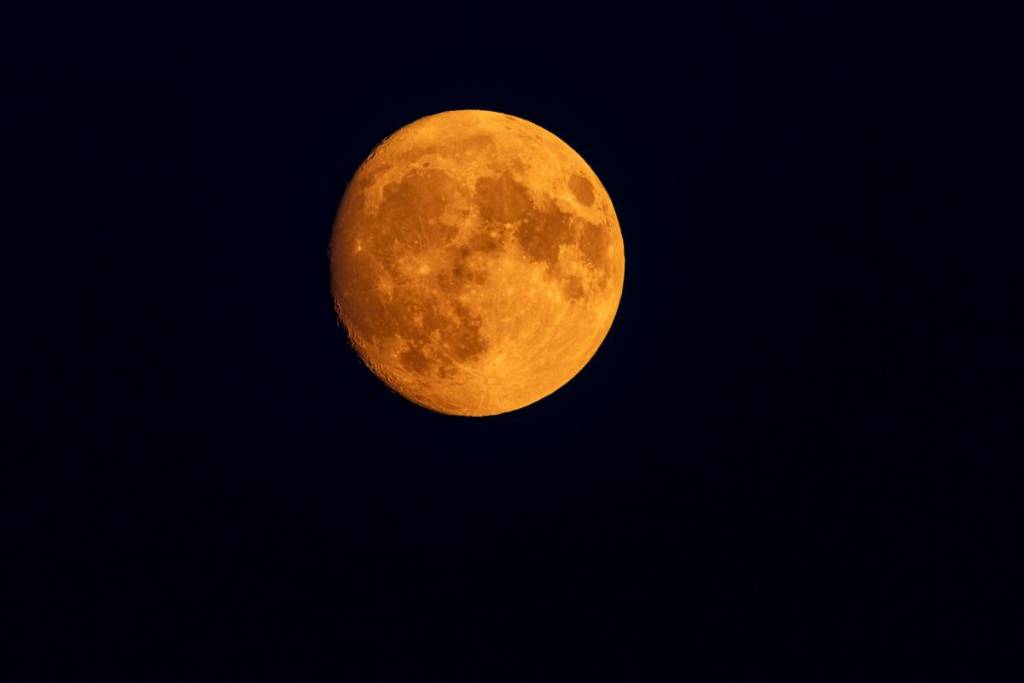
The fall equinox is on Wednesday, the 23rd, at 1:05 a.m. The Full Moon closest to that date is, by definition, the Harvest Moon—and in 2026, it reaches its full phase at 5:49 p.m. on Saturday, before the Moon rises in Porto; when it appears on the horizon, it will be almost completely illuminated.
The explanation is geometric. At this time of year, the Moon’s apparent path crosses the eastern horizon at a lower angle than usual. As a result, for several nights in a row, the Moon’s rise is delayed by less than a day from one night to the next and remains close to sunset. In an era when harvesting was done by hand, those moonlit afternoons right after sunset meant a few extra hours in the fields. The name stuck.
Three suggestions for places to watch the Moon rise

These are suggestions, not guarantees: we’ve chosen high vantage points facing the river valley upstream. What you’ll see depends on the clouds, what’s right in front of you, and whether you arrive early. Any other place with an unobstructed eastern horizon will work just as well.
Fontainhas Walk (Bonfim)
Our first choice, and not by chance: the promenade offers a view of the Douro River upstream, toward the east, and can be a good spot to look for the Moon low on the horizon. Visibility will depend on the exact location, buildings, trees, and weather conditions. On St. John’s Day, this is where the fireworks are set off; in September, there are no fireworks, but there is the Moon.
Serra do Pilar (Gaia)
The terrace offers a view of the eastern sky over the Douro Valley. Even so, the first sighting of the Moon will depend on the hillsides and other obstacles on the horizon.
Luís I Bridge
From the upper deck, you can see the Douro Valley to the east. The slope of Gaia may delay the first view of the Moon; pedestrians should stay on the sidewalks and away from the Metro tracks. Since this is a transit area, viewing should not obstruct traffic.
Locations that may offer less visibility toward the east
- Cais da Ribeira and Cais de Gaia. At water level, the hillsides and buildings may limit visibility of the Moon near the eastern horizon.
- Jardim do Morro. The position of the Serra do Pilar and the monastery may affect the first sighting of the Moon, depending on its exact location and path that night.
- Virtudes, Crystal Palace, Foz. These are locations associated with views toward the west and the sunset; they may be less suitable for spotting the Moon near the eastern horizon.
With clouds near the eastern horizon, the Moon only appears once it rises above them—and that may not happen until after sunset. If it happens on Friday or Saturday, there’s always the following night. And be sure to bring a jacket for the late afternoon.
Editor’s Note: Article updated at 5:59 p.m. on September 17, 2026.
Don’t miss out! Follow us on Facebook, Instagram, and now on WhatsApp too !