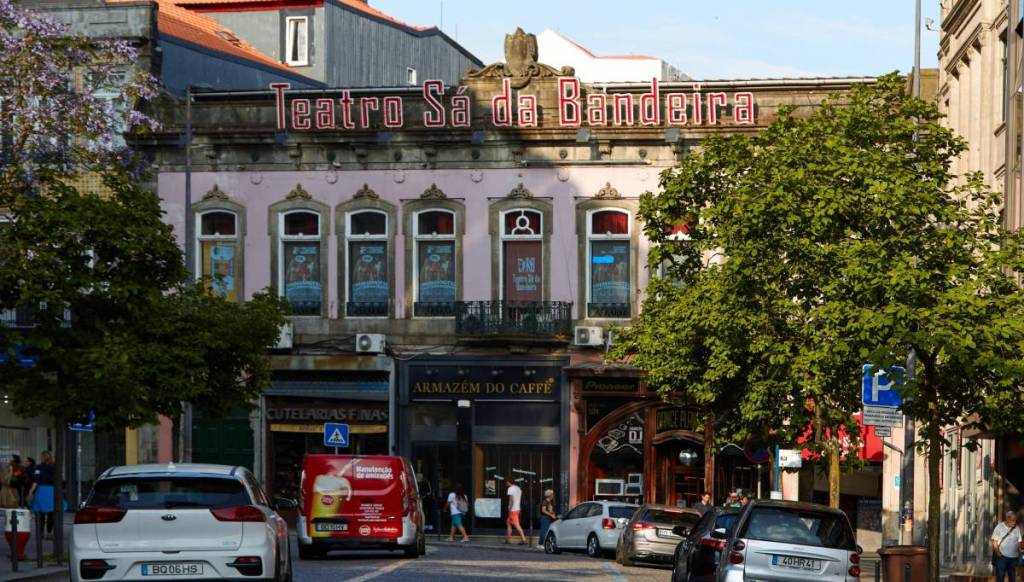

On November 12, 1896, the audience at the Teatro do Príncipe Real in Porto witnessed something they had never seen before: films made by a Portuguese filmmaker. Aurélio da Paz dos Reis presented his “Kinetographo Portuguez,” featuring a program of 12 scenes from national life. Among them was “Workers Leaving the Confiança Factory,” as reported by Público.
The theater is now called the Sá da Bandeira Theater; it is described by the Livraria Lello Foundation as Porto’s oldest performance venue and is about to mark the 130th anniversary of that screening. It is not the only cinematic landmark it preserves.
Porto Sees a Movie for the First Time
A few months earlier, on July 17, 1896, it was also at this theater that Porto was first introduced to the Animatograph, according to *Comércio com História*. But the November screening carried additional significance: the images were local and had been filmed by a Portuguese filmmaker.
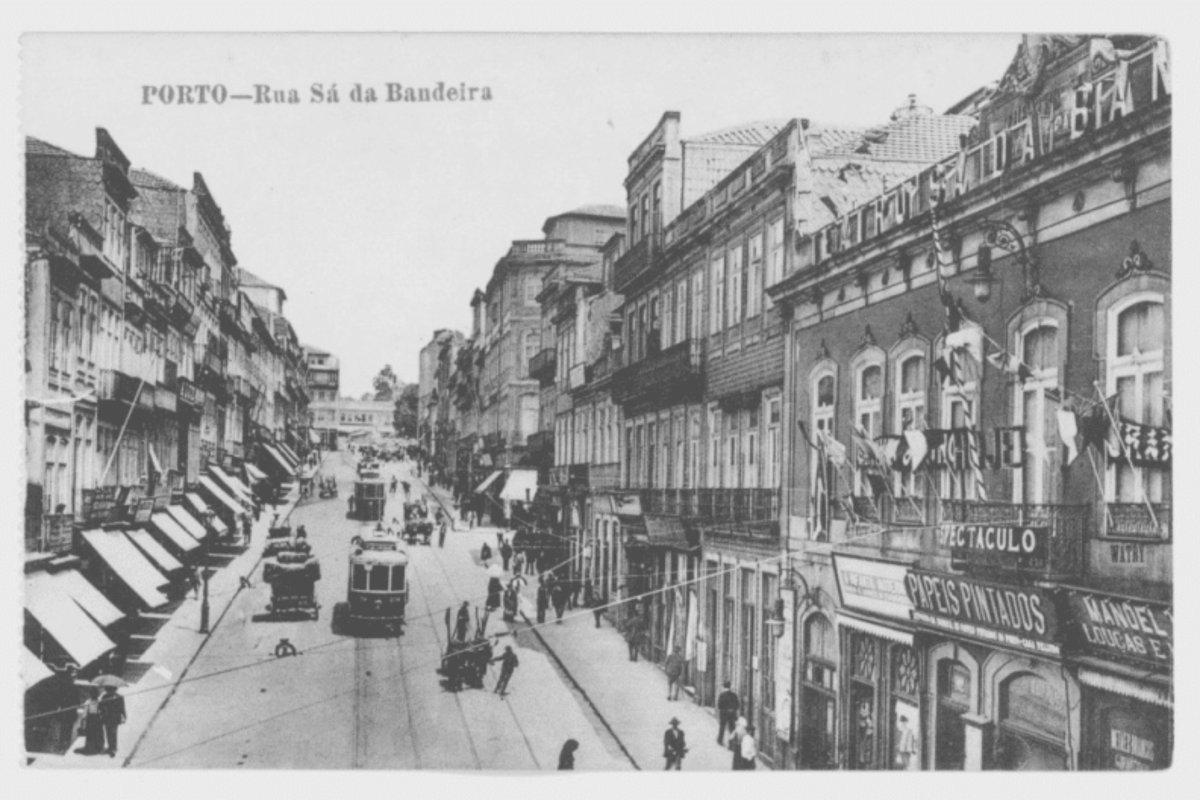
The enthusiasm was short-lived. The press at the time described it as a fleeting success, and shortly thereafter, Paz dos Reis left the film industry and devoted himself to flowers and photography. Even so, the Portuguese Film Archive preserves copies or fragments of some of the scenes he filmed, such as “Arrival of an American Train in Cadouços” and “Cattle Market in Corujeira.”
From the wooden circus to the Livraria Lello theater
The building’s history begins even earlier. On August 4, 1846, a circus opened there, in a wooden shed erected for José Toudon Ferrer Catalon’s equestrian troupe. It came to be known as the Teatro do Príncipe Real, and in October 1910—a week after the establishment of the Republic—it was renamed Sá da Bandeira.
Inside, the auditorium is circular, with 786 seats spread across four levels and white boxes with gilded carvings. Behind the scenes, the sets are still raised and lowered by hand, using ropes, pulleys, and wooden structures, according to Comércio com História.
In May 2019, Livraria Lello purchased the theater at a public auction for 3.5 million euros, as reported by DN, with the obligation to maintain it as a theater. The following year, the building was designated a Monument of Public Interest.
Don’t miss out! Follow us on Facebook, Instagram, and now on WhatsApp too!